


Some error occured while loading the Quick View. Please close the Quick View and try reloading the page.
A free ebook version of this title is available through Luminos, University of California Press’s Open Access publishing program. Visit www.luminosoa.org to learn more.
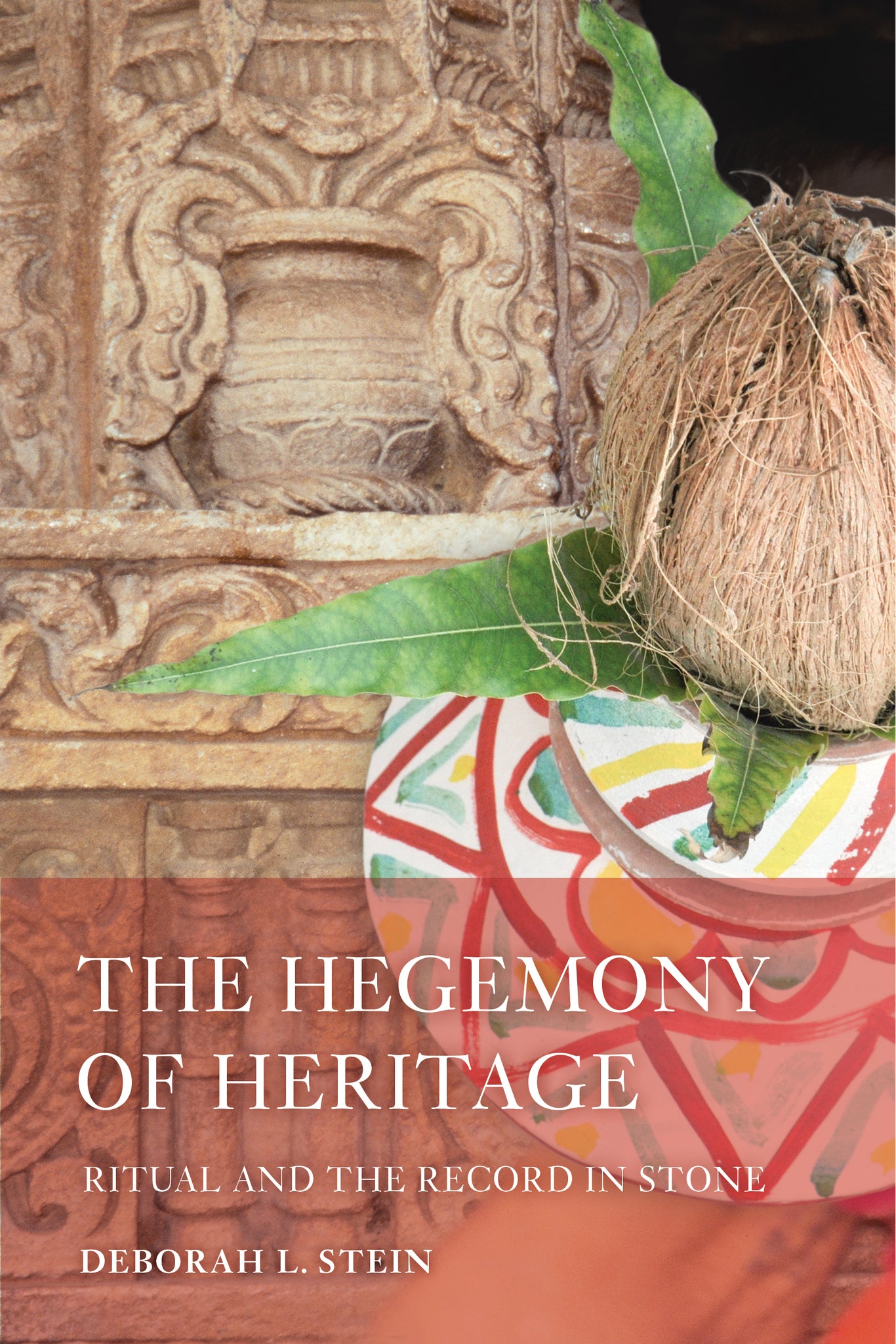
The Hegemony of Heritage makes an original and significant contribution to our understanding of how the relationship of architectural objects and societies to the built environment changes over time. Studying two surviving medieval monuments in southern Rajasthan—the Ambika Temple in Jagat and the Ékalingji Temple Complex in Kailaspuri—the author looks beyond their divergent sectarian affiliations and patronage structures to underscore many aspects of common practice. This book offers new and extremely valuable insights into these important monuments, illuminating the entangled politics of antiquity and revealing whether a monument’s ritual record is affirmed as continuous and hence hoary or dismissed as discontinuous or reinvented through various strategies. The Hegemony of Heritage enriches theoretical constructs with ethnographic description and asks us to reexamine notions such as archive and text through the filter of sculpture and mantra.
The Hegemony of Heritage makes an original and significant contribution to our understanding of how the relationship of architectural objects and societies to the built environment changes over time. Studying two surviving medieval monuments in southern Rajasthan—the Ambika Temple in Jagat and the Ékalingji Temple Complex in Kailaspuri—the author looks beyond their divergent sectarian affiliations and patronage structures to underscore many aspects of common practice. This book offers new and extremely valuable insights into these important monuments, illuminating the entangled politics of antiquity and revealing whether a monument’s ritual record is affirmed as continuous and hence hoary or dismissed as discontinuous or reinvented through various strategies. The Hegemony of Heritage enriches theoretical constructs with ethnographic description and asks us to reexamine notions such as archive and text through the filter of sculpture and mantra.

Price: $39.95
Pages: 338
Publisher: University of California Press
Imprint: University of California Press
Series: South Asia Across the Disciplines
Publication Date:
11 May 2018
Trim Size: 9.00 X 6.00 in
ISBN: 9780520296336
Format: Paperback
BISACs:
Deborah L. Stein holds a PhD from UC Berkeley and has taught at Mills College, UC Berkeley, UC Irvine, UC Santa Cruz, and San Francisco State University. Currently Senior Lecturer at California College of Arts, she is the author of several peer-reviewed articles.
List of Illustrations
Acknowledgments
Introduction: The “Hindu” Temple in Diachronic Context
1. Temple as Geographic Marker: Mapping the Tenth-Century Sectarian Landscape
2. Temple as Catalyst: Renovation and Religious Merit in the Field
3. Temple as Royal Abode: The Regal, the Real, and the Ideal in Fifteenth-Century Mewar
4. Temple as Palimpsest: Icons and Temples in the “Sultanate” Era
5. Temple as Ritual Center: Tenth-Century Traces of Ritual and the Record in Stone
6. Temple as Praxis: Agency in the Field in Southern Rajasthan
7. Temple as Legal Body: Aesthetics and the Legislation of Antiquity
Conclusion: Heritage and Conflict: Medieval Indian Temple as Commodified Imaginary
Notes
Bibliography
Index
Acknowledgments
Introduction: The “Hindu” Temple in Diachronic Context
1. Temple as Geographic Marker: Mapping the Tenth-Century Sectarian Landscape
2. Temple as Catalyst: Renovation and Religious Merit in the Field
3. Temple as Royal Abode: The Regal, the Real, and the Ideal in Fifteenth-Century Mewar
4. Temple as Palimpsest: Icons and Temples in the “Sultanate” Era
5. Temple as Ritual Center: Tenth-Century Traces of Ritual and the Record in Stone
6. Temple as Praxis: Agency in the Field in Southern Rajasthan
7. Temple as Legal Body: Aesthetics and the Legislation of Antiquity
Conclusion: Heritage and Conflict: Medieval Indian Temple as Commodified Imaginary
Notes
Bibliography
Index